
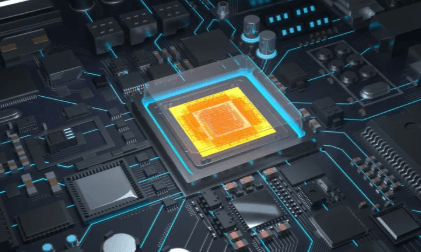

Modern processors manage multiple tasks by distributing work across cores and threads, guided by schedulers that balance latency and throughput. They leverage caches and deep pipelines to keep data local and instructions flowing, while context switching minimizes idle time. Power and thermal policies modulate frequency and voltage, and core parking conserves energy on idle units. Synchronization and predictability meet diverse workloads, but the interplay of locality, contention, and scheduling decisions invites further scrutiny.
What Problem Do CPUS Solve When Multitasking?
Multitasking exposes a fundamental scheduling problem: how to allocate limited CPU resources among competing tasks to maximize throughput and responsiveness.
The issue centers on context switching, task prioritization, and interrupt handling, which manage timing and attention.
Resource contention arises when tasks compete for shared data or hardware.
A disciplined framework enables predictable performance while preserving freedom to execute diverse workloads.
How Cores, Threads, and Schedulers Coordinate Work
Modern CPUs coordinate work by distributing tasks across cores, managing thread execution, and scheduling operations to align with hardware capabilities.
The discussion analyzes how cores synchronize tasks, how thread scheduling assigns work to processing units, and how schedulers balance contention and latency.
This framework emphasizes core synchronization, thread scheduling, and deterministic progress, avoiding speculation while preserving a freedom-minded, analytical perspective.
How Caches and Pipelines Speed up Multitasking
Caches and pipelines accelerate multitasking by reducing memory access latency and increasing instruction throughput, respectively, while interacting with the processor’s execution resources to minimize stalls.
This analysis treats caches and pipelines as structural accelerators that optimize data locality, instruction scheduling, and parallelism. In multitasking optimization, cache locality and deep pipelines reduce latency variance, enabling smoother resource utilization and predictable performance under diverse workloads.
How Modern CPUS Balance Power, Temperature, and Performance
How do contemporary CPUs navigate the trade-offs among power consumption, thermal output, and performance to maintain efficiency under varying workloads? Modern processors employ dynamic frequency scaling, voltage regulation, and core parking to balance energy use with cooling demands.
They implement cooling strategies to prevent overheating, detect thermal throttling, and adjust workloads accordingly, preserving throughput without compromising system reliability or user experience.
See also: propagatenetworkscom
Frequently Asked Questions
How Do CPUS Prioritize Real-Time vs. Background Tasks?
Real-time scheduling prioritizes latency-sensitive tasks, preempting less urgent work; background processing yields to deadlines when necessary, then resumes. The system employs priority classes, preemption, and time slicing to balance responsiveness, throughput, and power efficiency for freedom-loving users.
What Happens During a Context Switch in Multitasking?
During a context switch, the scheduler saves the current task state and loads a new one, enabling preemption; context switching exposes task scheduling decisions, prioritizes fairness, and preserves correctness for uninterrupted system operation and responsiveness.
Do Multitasking Efficiencies Differ Across Operating Systems?
Like a tightrope walker, multitasking efficiencies differ across operating systems. The analysis notes variances in multithreading libraries and kernel scheduling, revealing architectural choices that affect throughput, latency, and responsiveness for autonomous, freedom-seeking computational workloads.
How Do Speculative Execution and Out-Of-Order Execution Affect Multitasking?
Speculative pitfalls and out of order hazards influence multitasking by shaping instruction flow, cache access, and pipeline stalls; they introduce contention, require speculation rollback, and emphasize architectural safeguards that preserve correctness while exploiting parallelism amid freedom-focused design.
Can Multitasking Cause Software Bugs or Race Conditions?
Yes, multitasking can introduce software bugs and race conditions due to timing, resource contention, and non-deterministic interleaving. Two word discussion ideas: software bugs, race conditions. The analysis remains analytical, technical, methodical, and oriented toward readers seeking freedom.
Conclusion
In multitasking, modern CPUs orchestrate diverse work with disciplined resource allocation and precise timing. Cores, threads, and schedulers partition tasks, while caches and pipelines extract locality and latency benefits. Dynamic power and thermal controls modulate frequency and voltage to sustain throughput without overheating. Synchronization ensures coordinated progress across units, and structural accelerators embed data locality into scheduling decisions. The overall system behaves like a well-tuned orchestra, where each instrument—core, cache, pipe, and cache coherence—contributes a synchronized, humming tempo.